
Six months ago, when I returned to the United States from working with deaf people in Cambodia, I experienced dramatic differences between the Cambodian Kingdom of Wonder and the Kentucky Commonwealth: I had not encountered snow and ice for 40 years. I’m eating much less rice now! Everything is so expensive. I don’t know how to open the doors or start a new car.
In Louisville, there are no three-wheel tuk-tuks plying the streets and no hordes of small motorcycles, the main mode of transportation in Cambodia. In Cambodia, the stoplights are basically optional. It is not uncommon for traffic there to go both ways on both sides of the street. There is almost no Cambodian traffic enforcement, and if a policeman waves you over — there is no pursuit — it is probably for a made-up law to get an on-the-spot payment to the officer’s pocket.
Back in Louisville, traveling around, one cannot help noticing all the pets and the veterinary clinics. And there are all the billboards for personal injury lawyers. At home, there are non-stop TV ads for treatments for diseases and ailments I’ve never heard of — with dire warnings for all sorts of unintended consequences. Cambodia has little of that.
There are also more subtle differences between Cambodia and Kentucky, especially with social relationships. My first night back in Louisville, I went to a parish dinner and was amazed at all the connections others had with my family and with Pewee Valley, where we lived. I felt part of something, some social fabric. That is really different from Cambodia, where it is difficult to feel connected to people with whom you have little in common.
Cambodian people are very warm, polite and respectful, especially to those they see as their superiors. A domestic helper leaving for home with an armful of bags and boxes and maybe the day’s trash will put everything down on the floor to say goodbye with a wai, the folded hands directed toward another. A Cambodian walking past two others talking will bend over respectfully from the waist, apologizing for disturbing the conversation.
On the other hand, Cambodians don’t make eye contact or acknowledge others on the street. In Louisville, drivers nod or wave when others let us into traffic. And even an elderly woman at Kroger will smile and say, “Excuse me,” when her cart gets too close to mine. That isn’t so common in Cambodia, both because of culture and because the stores don’t have shopping carts.
I have really appreciated all the greetings and acknowledgments that are part of daily life here. So many people out walking greet me when I bicycle past. But other parts of U.S. culture have made me uneasy or even a bit anxious.
Preparing to return to the U.S., I thought it would be good to get clothes in Cambodia because they would be cheaper there. I went to a little tailor near the deaf office, and he made a black suit, three clerical shirts, and two pairs of pants for me — and charged me $232. I was aware of another reason for going to him also: the prospect of shopping, going around from store to store, looking for my size and style, trying it on, was a bit daunting to me. I haven’t bought clothes off the rack for 40 years.
Being back in Louisville has been an adjustment, but gracious and welcoming family and friends and even people on the street have made me feel at home here.
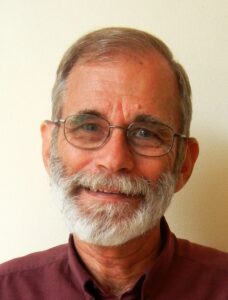
Father Charles Dittmeier is a priest of the Archdiocese of Louisville who recently retired from decades of service as a missioner, most recently serving the deaf community in Cambodia.
