
VATICAN CITY (CNS) — Visiting two countries over six days on his first foreign papal trip, Pope Leo XIV preached unity, dialogue and respect for differences as the only paths to peace.
Spending time with Catholics, other Christian leaders and top Muslim clerics in Turkey Nov. 27-Nov. 30 and Lebanon Nov. 30-Dec. 2, the pope made formal speeches about how believing in God as the father of all means recognizing one another as brothers and sisters.
But he also set aside time in a packed schedule for private talks, lunches and late evening meetings with the leaders.
“The more we can promote authentic unity and understanding, respect and human relationships of friendship and dialogue in the world, the greater possibility there is that we will put aside the arms of war, that we will leave aside the distrust, the hatred, the animosity that has so often been built up and that we will find ways to come together and be able to promote authentic peace and justice throughout the world,” he told reporters flying back to Rome with him Dec. 2.
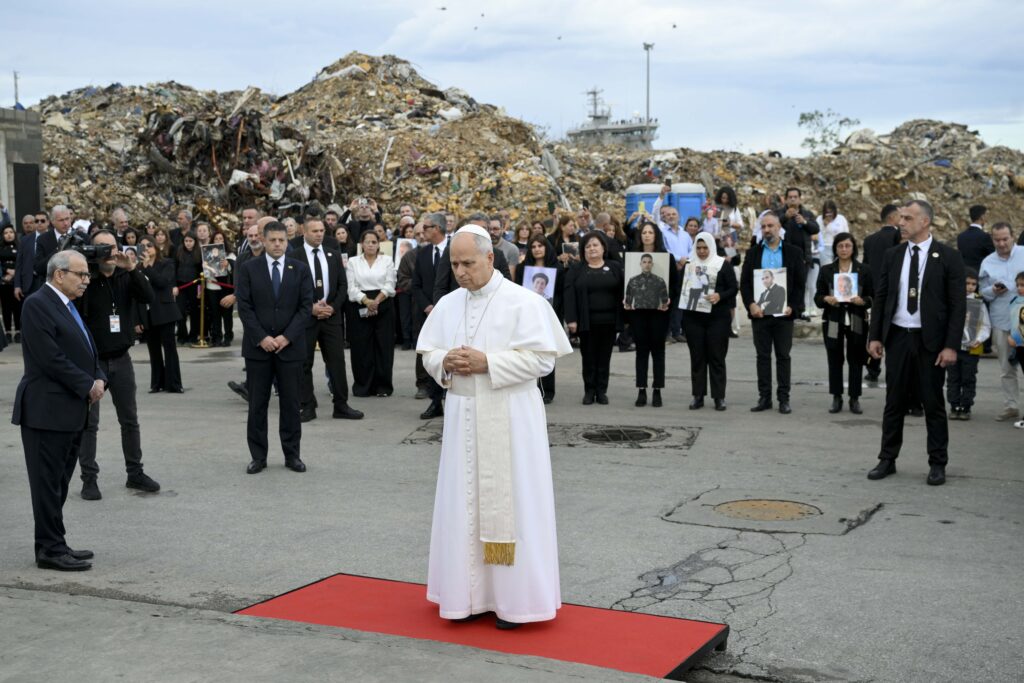
The three iconic moments of the trip were his prayer with top Christian leaders Nov. 28 at the site of the Council of Nicaea, his visit to the Blue Mosque in Istanbul Nov. 29 and his prayer Dec. 2 amid the rubble of the Beirut port explosion in 2020.
The whole trip was planned to commemorate the 1,700th anniversary of the Council of Nicaea and its drafting of the Creed that mainline Christian communities still recite today.
Orthodox Ecumenical Patriarch Bartholomew of Constantinople hosted the ecumenical prayer service and the common recitation of the Creed on a platform overlooking the ruins of a Christian basilica in Iznik, site of the ancient Nicaea, about 80 miles southeast of Istanbul.
With the Greek Orthodox patriarchs of Antioch, Alexandria and Jerusalem or their representatives and with representatives of other Orthodox, Anglican and Protestant churches, Pope Leo said that at a time when humanity is “afflicted by violence and conflict,” the world “is crying out for reconciliation.”
“The desire for full communion among all believers in Jesus Christ is always accompanied by the search for fraternity among all human beings,” he said. “In the Nicene Creed, we profess our faith ‘in one God, the Father.’ Yet, it would not be possible to invoke God as Father if we refused to recognize as brothers and sisters all other men and women, who are created in the image of God.”
The desire to reach out and form relationships with others also was on display when Pope Leo, like his two immediate predecessors, removed his shoes and entered the so-called Blue Mosque in Turkey’s capital; he spent about 20 minutes inside but did not appear to pause for prayer as Pope Benedict XVI and Pope Francis had done.
Instead, he listened to Askin Musa Tunca, the mosque’s muezzin who calls people to prayer five times a day, explain the building, its construction and how Muslims pray. And the pope asked questions.
The Vatican press office said afterward that Pope Leo visited the mosque “in a spirit of reflection and attentive listening, with deep respect for the place and for the faith of those who gather there in prayer.”
On his last morning in Beirut, he laid a wreath, lit a candle and prayed silently at a memorial to the more than 200 people killed when improperly stored chemicals exploded at the port; the blast also injured some 7,000 people and left an estimated 300,000 people without homes.
Standing amid mountains of rubble, piles of burnt-out cars and heaps of tattered clothing and cloth, the pope was joined by family members of those killed and by people still bearing the scars of injuries they suffered that day.
They carried photos of the loved ones they lost and signs appealing for the government to seriously investigate who was at fault for allowing the chemicals to be stored there.
A young woman, crying, asked Pope Leo for a hug, which the pope gave her before putting his hand on her head and blessing her.
At Mass afterward, he said, “I prayed for all the victims, and I carry with me the pain, and the thirst for truth and justice, of so many families, of an entire country.”
And after Mass, before heading to the airport, he told the people, “During these days of my first apostolic journey, undertaken during this Jubilee Year, I wanted to come as a pilgrim of hope to the Middle East, imploring God for the gift of peace for this beloved land, marked by instability, wars and suffering.”
Even when it seems peace is far off, Pope Leo said, “I invite you to lift your gaze to the Lord who is coming! Let us look to him with hope and courage, inviting everyone to set out on the path of coexistence, fraternity and peace. Be artisans of peace, heralds of peace, witnesses of peace!”
