
The Catholic Education Foundation has selected the winners of its annual Catholic Schools Week Poster and Essay Contest.
Students in kindergarten through high school produced artwork and essays on the theme “Pilgrims of Hope: Journeying Together in Faith, Service and Learning.”
Entrants in the essay contest were asked to explore the theme through the lens of being a student in a Catholic school. CEF prompted the students to consider the following: “God created us to live in community and serve one another’s needs so that we might grow in holiness. How do you model your life after Christ and foster a community of faith, service, and learning in your school?”
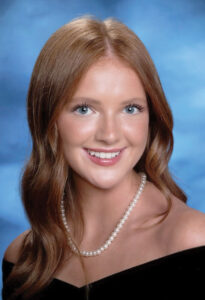
Kaden Rees Hardy, a senior at Bethlehem High School in Bardstown, Ky., won the essay contest. (See the essay below.)
In the poster contest, entrants in kindergarten through eighth grade were asked to consider: “We are examples of Jesus when we listen and care for those in our school community. How do I model Jesus’ teachings in my community?”
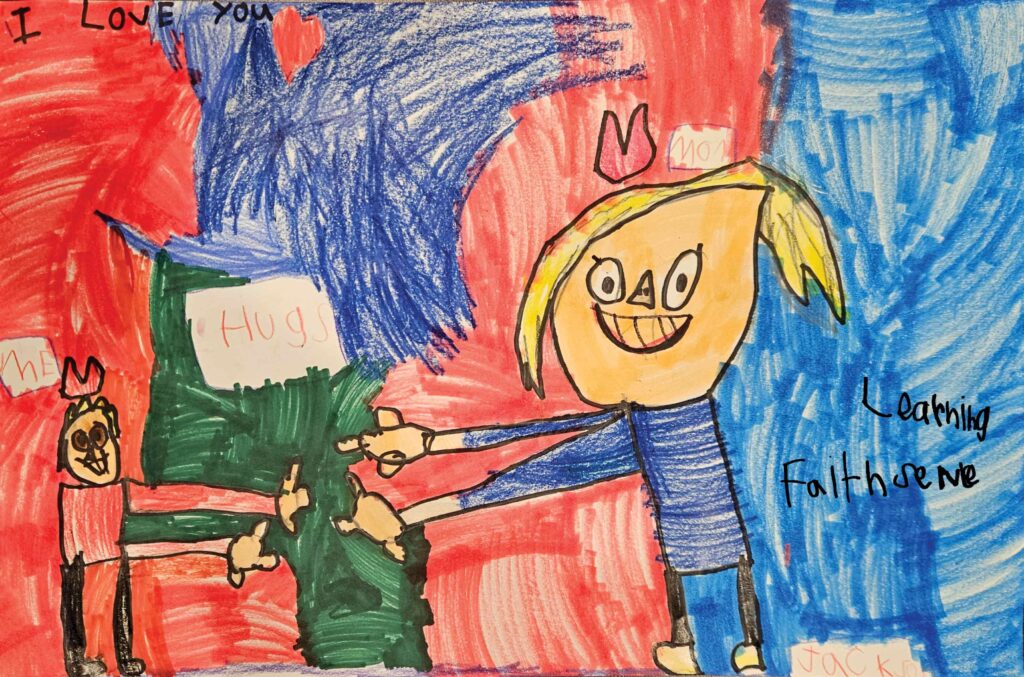
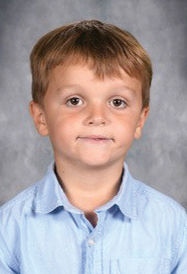
Jackson Nall, a kindergartener from Holy Spirit School, won the kindergarten through second-grade division.
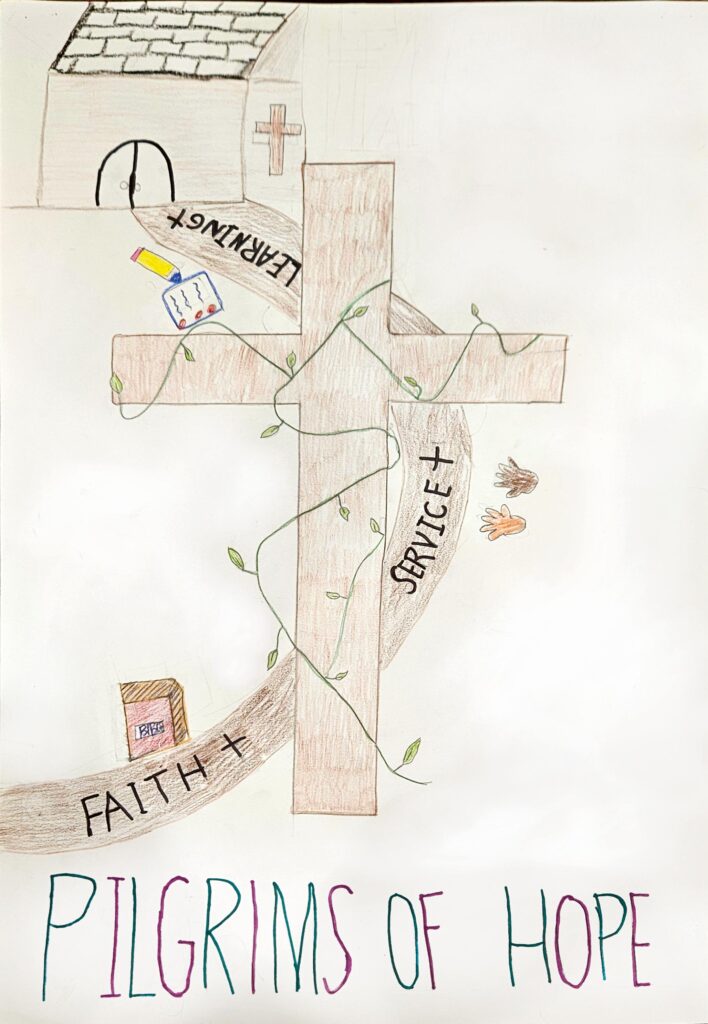
Lucy Cronen, a fourth grader from Our Lady of Lourdes School, won the third- through fifth-grade division.
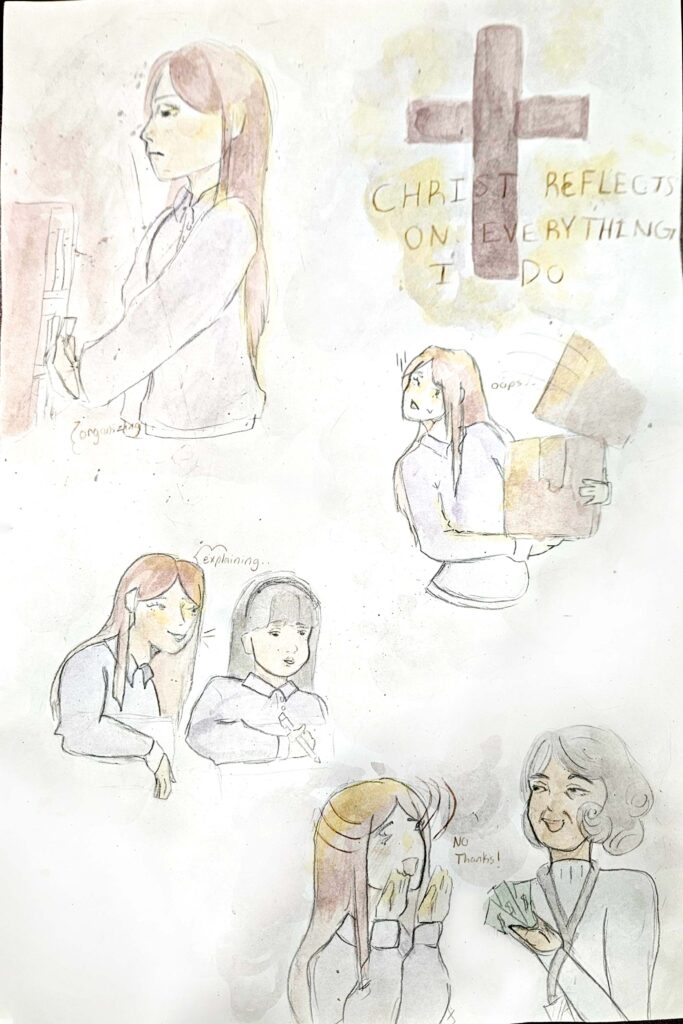
Eliana Basic, an eighth grader at St. Nicholas Academy, won the sixth- through eighth-grade division.
Poster contest winners will each receive $250 and their poster framed. The essay winner receives $1,000. With the cancellation of the CSW Mass, the awards will now be distributed to the schools of each respective winner.
Growing a Community of Faith, One Heart at a Time
Kaden Rees Hardy
When I moved from Georgia to Kentucky, people assumed the transition would be easy because I came from a Christian school. I was used to praying before class, singing worship songs at the chapel and talking openly about God. Faith wasn’t new to me. But the move still felt like being uprooted mid-bloom.
Everything, my routines, my friendships, even the air, felt different. I missed the Georgia clay backgrounds and the comfort of a school where every classroom felt familiar. I wondered how I would ever fit my story into a place that already seemed to have its own rhythm.
My first week at Bethlehem, we gathered for Mass. Even though I’d prayed in school before, this felt different, like stepping into a centuries-old heartbeat. Students moved through the liturgy not out of habit, but as if they were part of something holy that shaped them.
I felt small and unsure, my responses barely above a whisper. But as the stained-glass windows washed warm colors across my hands, something in me softened. I felt God nudging me gently: “You’re not lost. Just keep walking.”
Art class was where that path started to open up. One morning, I saw a girl sitting alone at a table, her sketchbook blank, her posture curled inward. I recognized that feeling instantly — the ache of wanting to disappear and be seen at the same time. I sat across from her and joked that my drawing looked like a potato with self-esteem issues. She looked up, startled, then laughed — a real laugh, the kind that lifts the heaviness off your shoulders. By the end of class, we were swapping terrible sketches and laughing until our stomachs hurt. In that simple moment, I felt Christ working through something small, something human, something kind.
My religion teacher helped cement that feeling. After class one day, she pulled me aside and said, “You have a warmth about you that is beautiful. We are glad you are here.” Her words didn’t just comfort me, they challenged me. They made me ask myself: How am I reflecting Christ to others? How am I helping create the same sense of belonging that He gave me?
That question reshaped how I lived each day. I started trying to model Christ not through grand gestures but through the quiet, consistent acts He Himself chose, seeing people, really seeing them. Christ didn’t just preach; He listened. He didn’t just walk past people’s pain; He entered into it.
I try to do the same.
One afternoon, I walked into the bathroom and heard someone crying softly in the last stall. Usually, I would have slipped out to give her privacy. But something in me, a mixture of empathy and God’s gentle tug, kept me rooted. When she finally came out, her eyes were swollen, her whole face carrying the weight of something she couldn’t say out loud. I didn’t ask questions. I just handed her a tissue and whispered, “I’m here. You’re not alone.” She didn’t say much, but the look in her eyes told me she felt seen. And sometimes, that’s everything.
Slowly, I realized fostering a community of faith, service, and learning isn’t about creating huge movements — it’s about creating moments. I started praying intentionally for my classmates, even the ones I barely knew. I volunteered to help with school events, not because I had to, but because service shapes a softer, stronger heart. I studied with students who struggled. Not just to raise grades but to raise confidence. I shared Scripture with friends when they needed courage. I tried to speak gently, forgive quickly, and lift others without expecting anything in return.
Living like Christ doesn’t mean perfection — it means presence.
And in being present, I’ve watched community grow in front of me: the girl in art class who now saves me a seat, the girl from the bathroom who smiles at me in the hallway, the classmates who pray with me before tests, the friends who talk about faith like it’s a shared language instead of an assignment.
Sometimes I still think about the girl watching Georgia fade behind her. But now, I think even more about the girl sitting in Mass here, asking God to help her belong, and realizing He already was.
Being a pilgrim of hope means walking with God into the unknown and helping others feel safe enough to walk with you. And through faith, service, and learning, this community has become not just a school, but a home.
