
By Barb Fraze, Catholic Review/OSV News
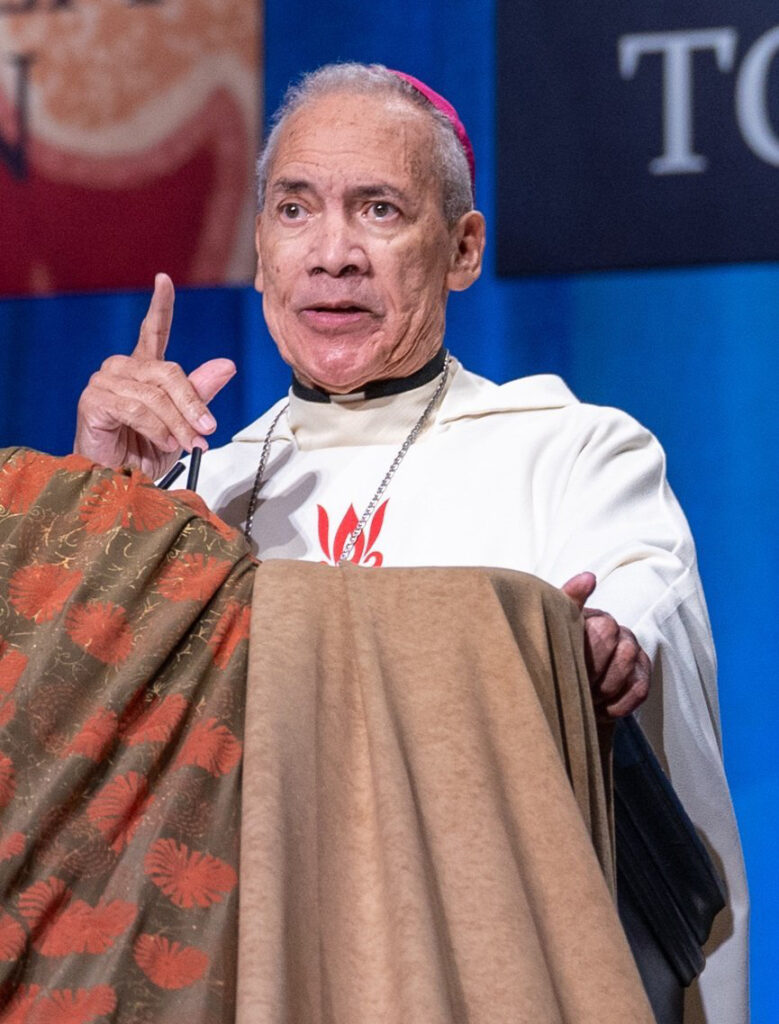
Retired Bishop John H. Ricard, the first Black bishop to be an auxiliary of the Archdiocese of Baltimore and to head the Diocese of Pensacola-Tallahassee, Florida, died May 20 at St. Joseph’s Seminary in Washington.
Bishop Ricard, also a nationally respected advocate for racial justice and a cousin of Archbishop Shelton J. Fabre, was 86.
Saying he was saddened to learn of his death, Archbishop Fabre said in a May 22 statement, “It doesn’t seem like all that long ago that, as a young seminarian, I had driven my parents to his episcopal ordination after he was appointed auxiliary bishop of Baltimore by Pope John Paul II in 1984.
“The memories of that day still serve as a vivid reminder of the joy felt throughout our family. Unbeknownst to me on that spring day, I would later join him as a successor to the apostles two decades later, and he would serve as a principal co-consecrating bishop at my own episcopal ordination when I became auxiliary bishop of New Orleans.
“In addition to the sadness I feel as a relative, I must admit that I am grieving the loss of another African American bishop of the Catholic Church in the United States,” said Archbishop Fabre. “At the time of Bishop Ricard’s death, he was serving as the Superior General of Saint Joseph’s Society of the Sacred Heart (Josephites), the society of apostolic life for men that staffed our family’s parish in New Roads, Louisiana. Bishop Ricard dedicated much of his life and ministry to the Josephites — and even returned to the society’s work after serving as bishop of Pensacola-Tallahassee, serving as rector of its seminary in Washington, D.C.”
In addition, Archbishop Fabre said, “He will be remembered for his work on the USCCB Subcommittee on the Church in Africa, the Solidarity Fund for the Church in Africa, the National Black Catholic Congress, and his overall service to those in need, particularly his advocacy for human dignity and social justice.”
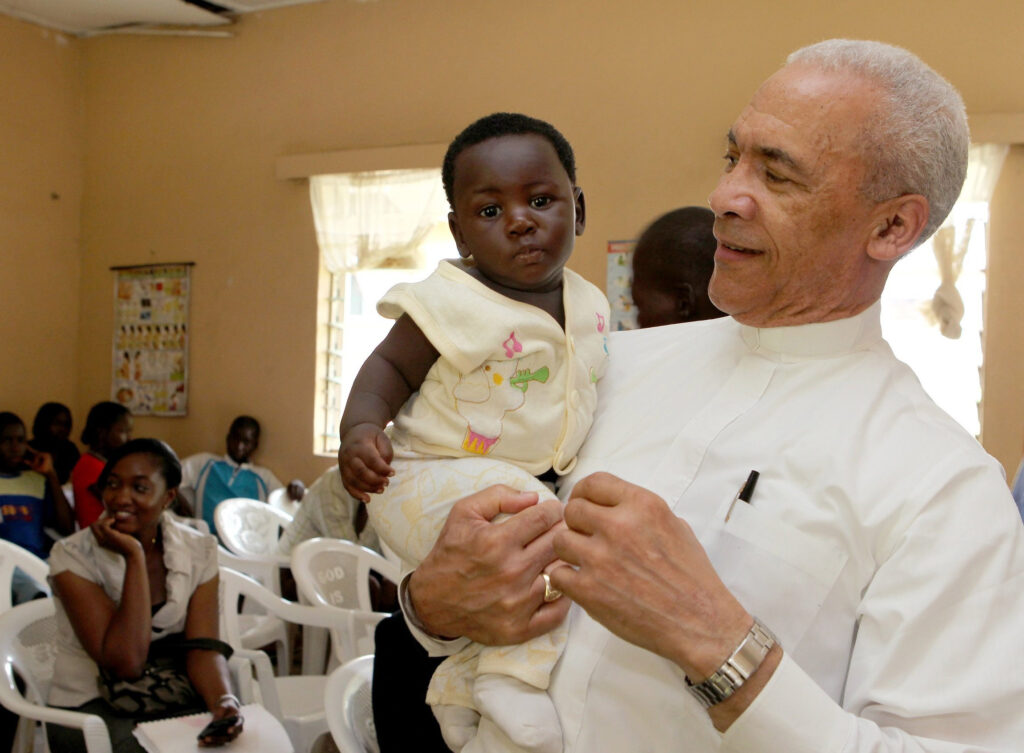
Archbishop Fabre’s father was a first cousin of Bishop Ricard, and the archbishop’s grandmother was Bishop Ricard’s godmother.
Bishop Ricard became one of the most influential Black Catholic voices in the United States during a time of important conversations about race, civil rights and the Church’s role in confronting injustice. He served as president of the Baltimore-based National Black Catholic Congress from 1987 until 2017, which he revived. Archbishop Fabre noted in his statement that the movement was initially established by Daniel Rudd of Bardstown, Kentucky.
Baltimore Archbishop William E. Lori said, “Bishop John Ricard’s death is a profound loss for our local Church and for the entire Catholic community in the United States. As the first Black bishop in the history of the Archdiocese of Baltimore, he served this archdiocese with grace, humility and a joyful spirit that made him beloved by all who encountered him.”
Archbishop Lori said Bishop Ricard was “deeply committed to the dignity of every human life and he was unafraid to speak out against racism and injustice wherever he saw them.”
“He lived out the charism of the Josephites — showing a prophetic vision for the inclusion of Black Catholics in the life of the Church and an unwavering commitment to justice — right up to his last days,” Archbishop Lori said. “May his soul rest in peace.”
Bishop Ricard was an auxiliary bishop of Baltimore from 1984 to 1997, when St. John Paul II appointed him bishop of the Diocese of Pensacola-Tallahassee. He retired in 2011 because of health concerns following a 2009 stroke and subsequent surgeries, but continued serving the Josephites in key leadership roles.
While serving as rector of St. Joseph’s Seminary in Washington, the primary formation house for the Josephites, Bishop Ricard was elected superior general of the congregation, formally known as the Society of St. Joseph of the Sacred Heart, in 2019 and reelected in 2023.
In a May 21 statement, the Josephites asked for prayers for the repose of Bishop Ricard’s soul, for the Josephite community, his family, friends and all who mourn his passing.
“Bishop Ricard faithfully served the Catholic Church for decades through his ministry as a Josephite priest, counselor, educator, pastor, bishop, humanitarian and leader,” the statement said. “He devoted his life to the proclamation of the Gospel, humanitarian efforts worldwide, the mission of the Josephite Society, and the pastoral care of God’s people, especially within Black Catholic communities.”
People who knew Bishop Ricard on a personal level recalled his kindness, his sense of humor and his approachability.
A’dell Lee, a parishioner of New All Saints in Liberty Heights who served as Bishop Ricard’s senior administrator at the Josephites for more than a decade, described him as the kind of person who “would give you the shirt off his back.”
She recalled one time when he went across the street to his doctor’s office when it was cold and snowing, and he met a homeless man. After his appointment, he came back and got his tennis shoes from under his bed.
“He put them in a bag, and he walked them across the street (and gave them) to the gentleman on the bench who had no shoes,” Lee told the Catholic Review, Baltimore’s archdiocesan news outlet.
Then-Father Ricard, 44, was pastor of Our Lady of Perpetual Help in Washington when he was named a bishop and appointed auxiliary of Baltimore. The priest was pouring concrete when he got the news, according to Josephite Father Donald Fest. After the call, the pastor went back and finished the job, Father Fest said.
He had a “sense of doing the job,” said Father Fest, a former longtime pastor of St. Veronica in Baltimore’s Cherry Hill neighborhood and currently pastor of St. Joseph in Alexandria, Virginia.
“In Baltimore, he was in great demand,” Father Fest said. “You wanted to hear Bishop Ricard. He was youthful. He was congenial and approachable.”
People wanted him “any time you needed a bishop” for a significant parish occasion, he said.
Shortly after he was named to Baltimore, Bishop Ricard was speaking out on national issues, often tying them to the local community. In 1985, Bishop Ricard wrote to Baltimore Jewish leaders deploring remarks by Louis Farrakhan, a Black Muslim leader; the bishop called the remarks anti-Jewish.
As urban vicar of Baltimore, Bishop Ricard was responsible for parishes within the city. In 1996, he and a committee of suburban and urban pastors initiated a project to encourage Catholics in the Baltimore metropolitan area to look at social and economic issues — such as white flight — from a regional and faith perspective.
During the first free elections in South Africa following the collapse of apartheid, Bishop Ricard served as an official electoral observer in Port Elizabeth, South Africa, April 26-29, 1994. In a 2013 interview with the Catholic Review, he called it a “great, life-changing experience” to witness thousands of South Africans of all races vote.
Bishop Ricard credited Nelson Mandela, the man South Africans elected as their president, for being a driving force behind making the historic election possible and for overseeing a peaceful political transition.
While in Baltimore, Bishop Ricard had been active in the anti-apartheid movement, participating in prayer vigils and anti-apartheid planning sessions in Baltimore and Washington.
Bishop Ricard served on the Baltimore-based Catholic Relief Services board of directors as treasurer from 1992 to 1995 before being named president and chairman in December 1995. He served two consecutive three-year terms in that position.
When he was appointed president, he told the Catholic Review the causes of poverty, homelessness and hunger overseas or in Baltimore were similar. He said in all cases, they rob people of their self-worth and dignity.
The solution, too, was similar, he said: helping people discover their own strengths and capabilities and putting tools in their hands to develop education and skills for work.
John Huston Ricard was born Feb. 29, 1940, in New Roads, Louisiana; he was one of eight children. He attended parochial elementary and high schools in Baton Rouge, Louisiana, and attended Epiphany College in Newburgh, New York, and St. Joseph Seminary in Washington.
He was ordained a Josephite priest in 1968 and, in 2018, when the society celebrated 125 years of ministry, he told the Catholic Review he chose to join the society because he saw the Josephites as “unselfish men who served the African American community, often at the risk of ostracizing themselves from other priests and other Catholics.”
In 1970, then-Father Ricard earned a master’s degree from Tulane University in New Orleans; in 1984 he earned a doctorate from The Catholic University of America in Washington.
He was an associate professor at Tulane University, 1970-71, and an adjunct associate professor at Catholic University, 1973-80. He also was consultor general for the Josephite Fathers, 1978-81. He was associate pastor at St. Peter Claver Church in New Orleans and pastor at three parishes in Washington before he was named an auxiliary bishop for Baltimore in 1984.
As president of the National Black Catholic Congress and head of the Josephites, Bishop Ricard served on a U.S. Conference of Catholic Bishops task force to deal with racial issues brought into public consciousness following a series of urban shootings in 2016 that left both citizens and police officers among those dead.
In a 2014 interview with Catholic News Service, he reflected on 50 years of the Civil Rights Act. “Racism is still a part of the fabric of our environment — of the air we breathe. It’s still part of the DNA of most Americans,” he said.
He said the issue can’t be addressed without recognizing that “whites, by and large, deny racism exists” and “black Americans, by and large, see it everywhere,” Bishop Ricard said.
In a 2016 interview, he said he thought the Catholic Church has a lot to “bring to the table” to bridge racial divides, pointing out that the church has a long history of speaking up for civil rights.
“We just have to recapture that,” he said. “We’ve got a lot of work to do” to combat racism, he said.
